Computerized vs. Manual Embroidery on Kurtis: Choosing the Right Work for Bulk Orders
Embroidery separates commodity kurtis from higher-margin boutique pieces. Knowing when to specify multi-head machine stitchwork versus hand accents helps brands control unit costing without sacrificing finish.
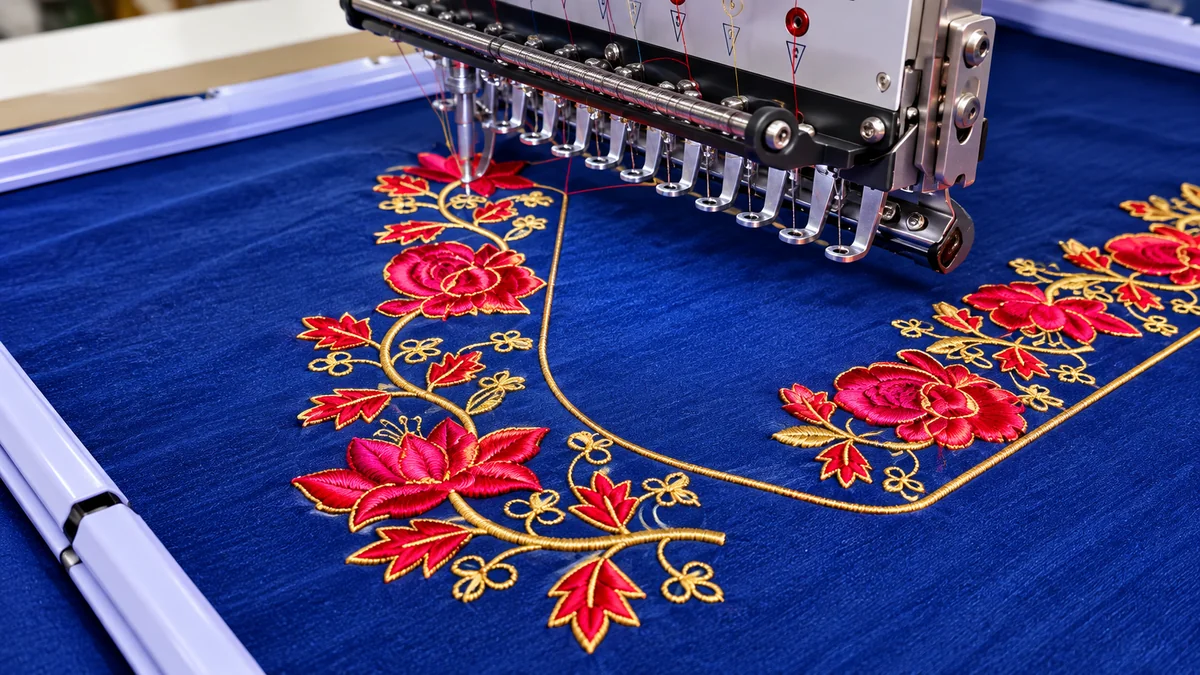
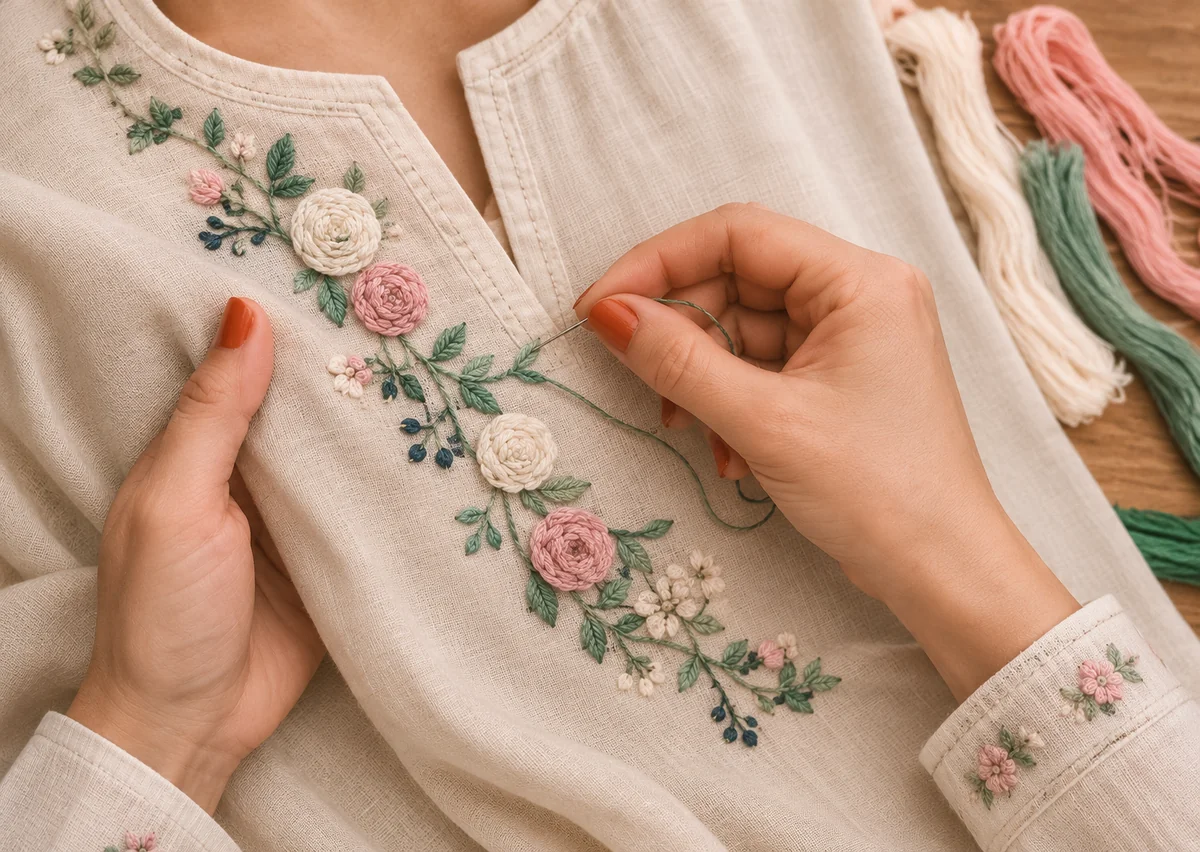
1. Computerized Multi-Head Embroidery (TAJIMA & BARUDAN)
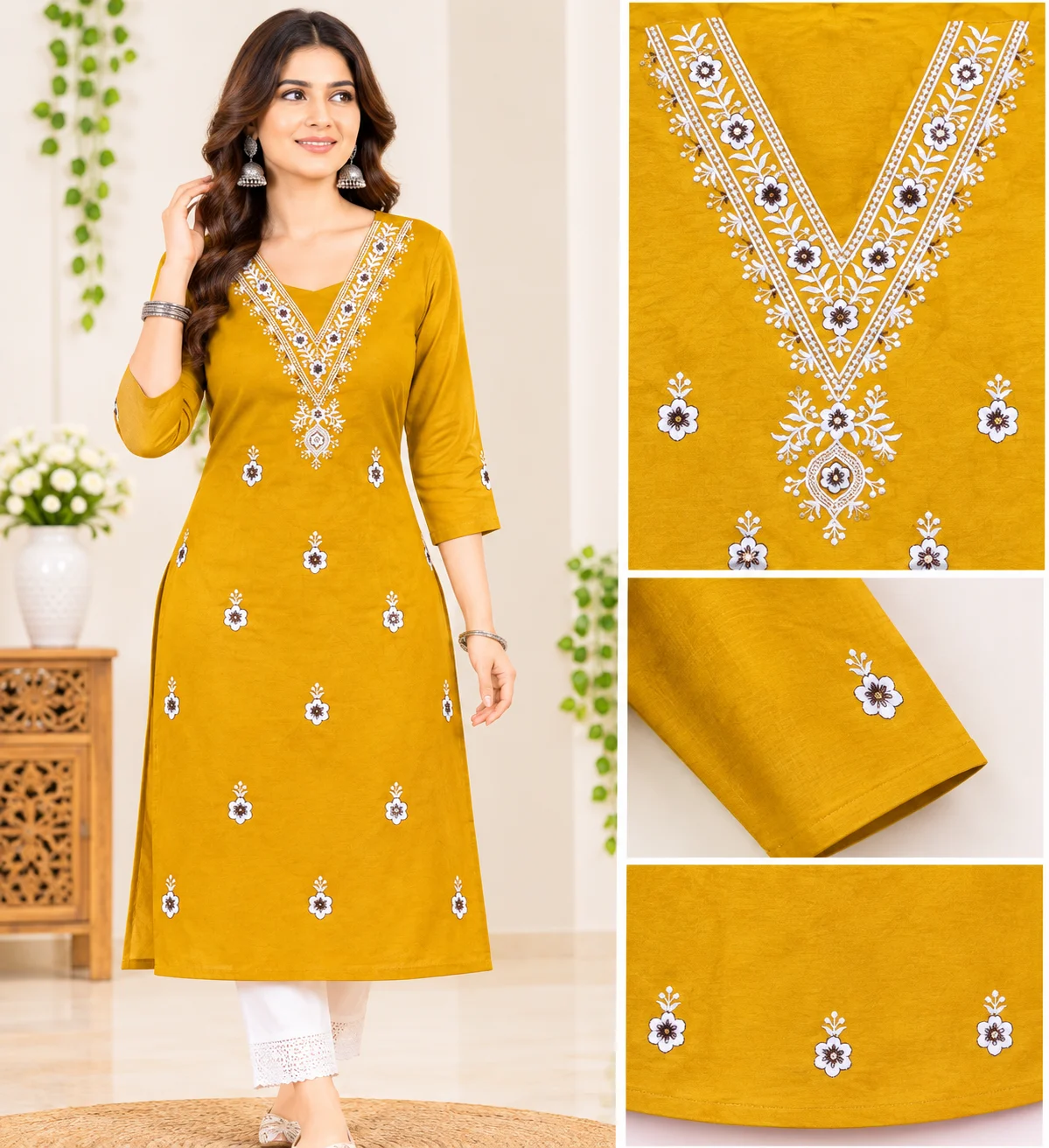
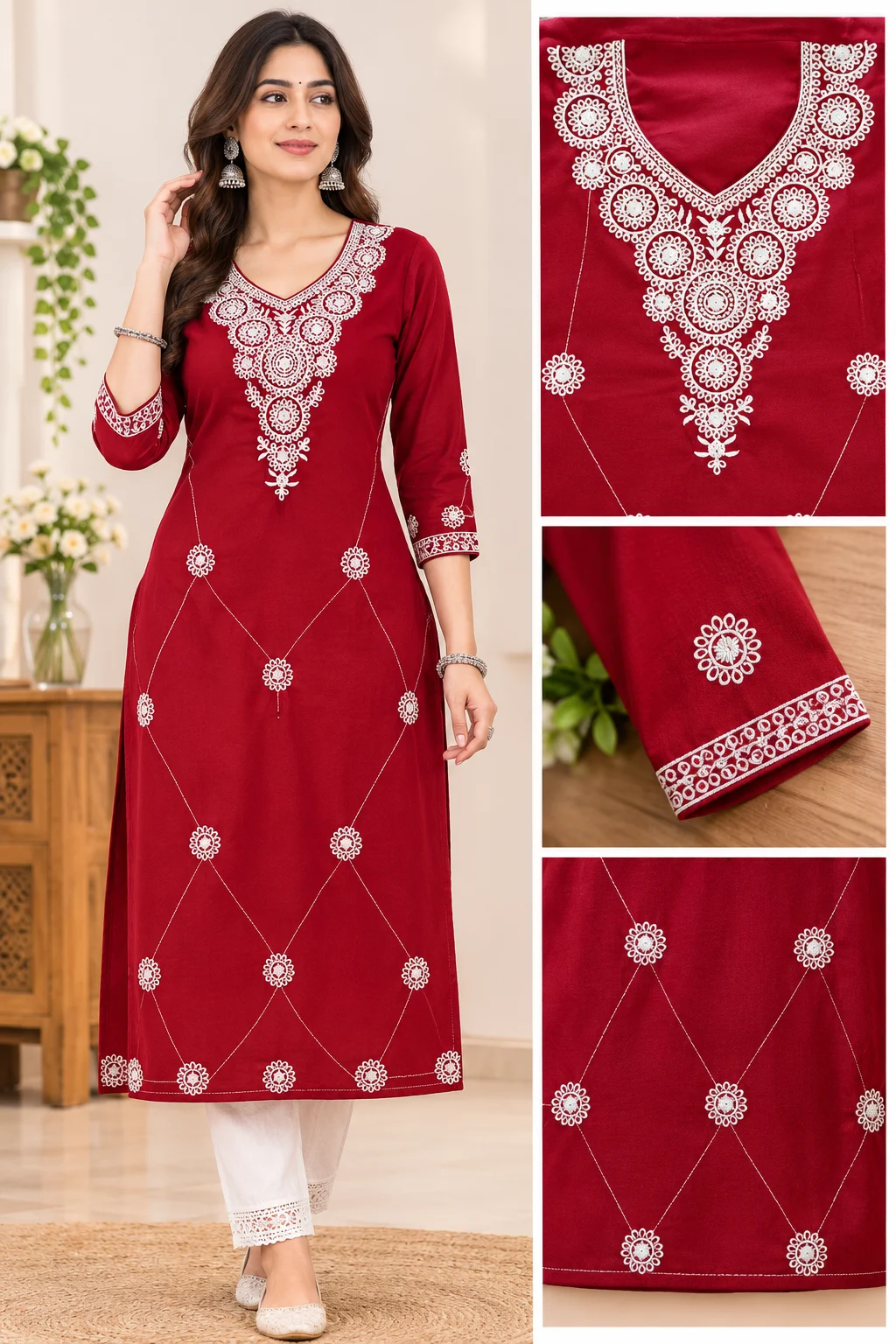
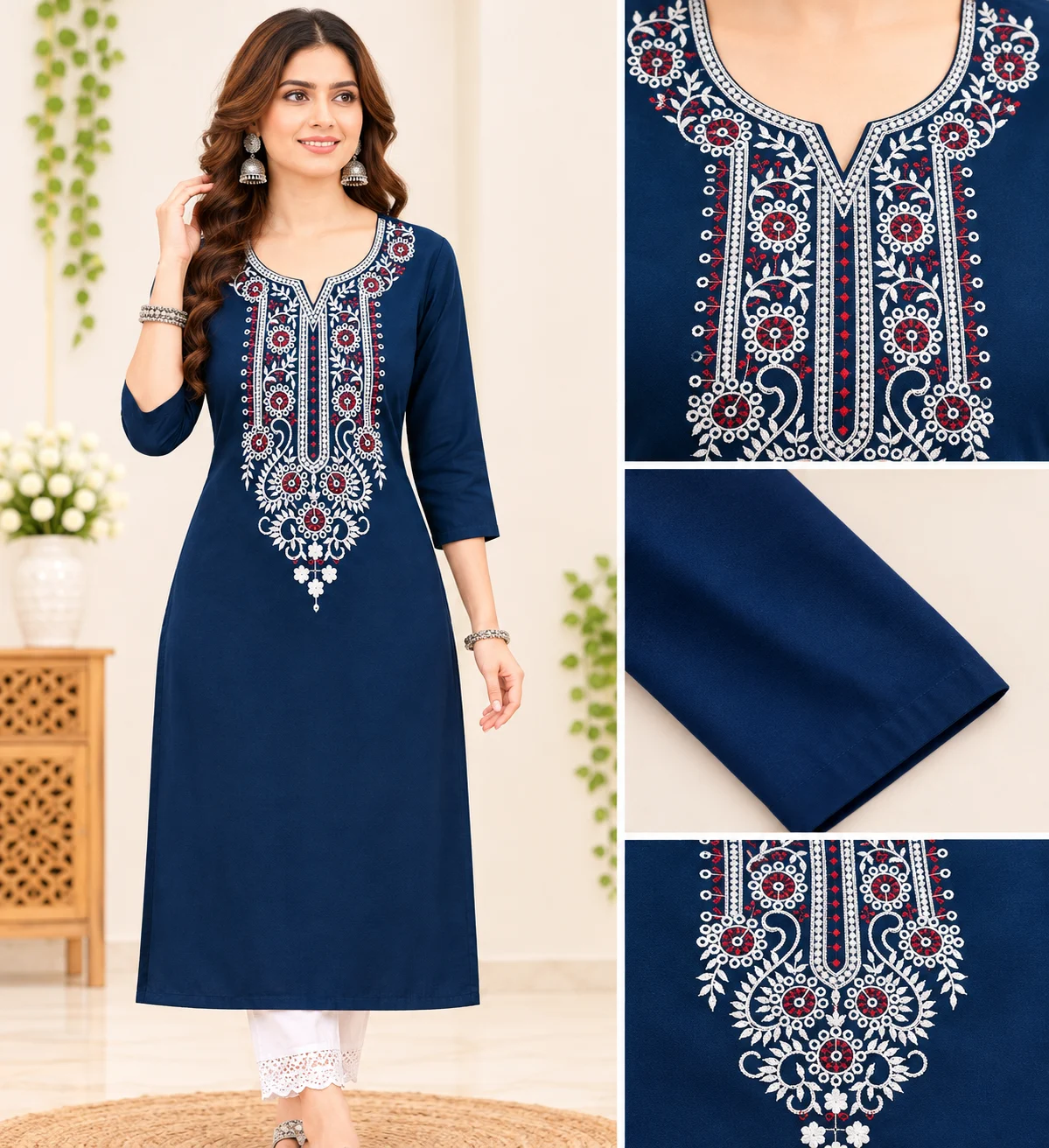
For repeatable 100-piece to 5,000-piece production runs, industrial TAJIMA and BARUDAN multi-head embroidery units deliver uniform stitch tension across every size grade. Buyers can submit artwork for motif digitizing or supply production-ready DST and EMB files supporting up to 12 thread colors per design (subject to machine and design constraints).
2. Frame, Alternate & Tonal Threadwork
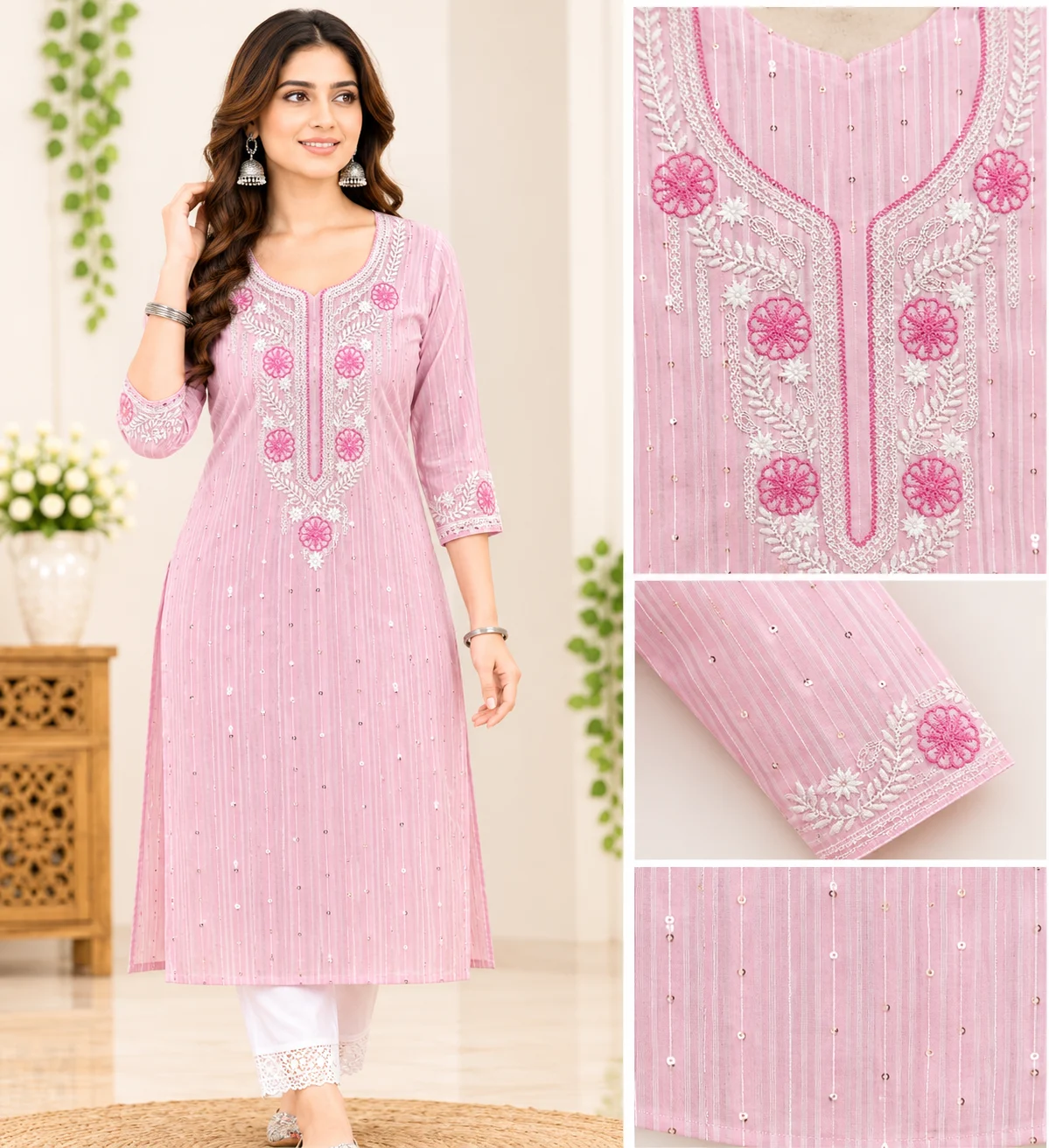
- Frame Embroidery: Ideal for crisp V-neck plackets, booti repeats, and lower damman hemline borders.
- Alternate Multi-Shade Stitching: Pairs contrasting borders along necklines and sleeve edges for festive appeal.
- Lucknowi Tonal & Resham Work: Soft silk or tonal cotton-look threads on mulmul, modal, and Chanderi.
3. Manual Hand Detailing & Siroski Accents
When boutique silhouettes call for tactile relief—such as French knots, bullion roses, stem stitching, or mirror and Siroski stone highlights—manual detailing elevates high-margin occasion pieces.
4. Fabric Compatibility & Indicative Costing
Always confirm stitch density against fabric weight via a physical strike-off before bulk cutting—for example, delicate mulmul and tissue require different backing stabilizers than 140 GSM rayon, cotton, velvet, or jacquard. Indicative bulk embroidery add-on rates typically sit around ₹40–₹80 per piece at 100 pieces MOQ (subject to final design inspection).
Explore In-House Embroidery Capabilities
View all 6 core techniques, zone placements, and custom motif digitizing from our Delhi unit.